Ants in the Heat of Survival
Surveys the ecological importance of ants and the threats that climate change poses to them, drawing on an observation of a captive weaver ant colony.
Though hardly noticed, they are the most ubiquitous and ecologically significant organisms on Earth. With just six legs and three distinct body segments, ants range in size from a mere three-quarters of a millimeter to nearly an inch in length. Despite their small stature, they have an estimated population of about 20 quadrillion, having a total biomass that surpasses that of all birds and mammals combined.1 They perform critical tasks in maintaining our ecosystems, assisting with soil aeration, seed dispersal, nutrient cycling, and pest control. Their presence is necessary for ecological stability, making them indispensable to the health of terrestrial ecosystems. With the accelerating pace of climate change in today’s world, however, ants are considered to be one of the most vulnerable organisms, experiencing alterations in their behavior, habitats, and survival strategies. Among these, weaver ants (Oecophylla smaragdina) represent a particularly instructive case study in understanding how certain ant species (in this case an arboreal) respond to environmental transformations.
As ecosystem engineers, ants shape their environments in ways that benefit both flora and fauna. They perform a variety of functions that make them necessary components for our environment. Such roles of theirs include: aerating soil through their tunneling activities, which helps to increase soil macroporosity and fertility; contributing to nutrient cycling by breaking down organic matter and redistributing nutrients across ecosystems; and facilitating the dispersal of seeds for plant reproduction.2 In addition, many ant species—including weaver ants—act as natural pest controllers, preying on herbivorous insects that damage crops.3 Ants, thus, are vital towards our ecosystem and even more so specifically for agriculture and forestry, enhancing crop yields and maintaining plant health. Their symbiotic relationships with plants and other insects contribute to biodiversity and ecosystem resilience. Moreover, ants that rely on foraging and specific habitats are more vulnerable than other insects with broader ecological niches, making them sensitive indicators of environmental change.
Climate change is altering the environmental conditions that ants rely on for survival. Rising global temperatures, shifting precipitation patterns, and increased volatility of extreme weather events are disrupting ant behavior, distribution, and reproductive success.4 Ants are ectothermic organisms, meaning that their body temperature and metabolic rates are regulated by external environmental conditions. As temperatures rise, ants become more active, leading to increased food and oxygen consumption. While they can thermoregulate to some degree, the process is highly energy-intensive and places additional stress on their survival.5 This is reflected directly in an experiment performed by Fátima García Ibarra et al., where the increase in temperature resulted in deeper and larger nests, showing the ants’ efforts to seek cooler areas and avoid excessive heat.6 Additionally, it is also noted that due to their ectothermic nature, they have a specific temperature range in which they can carry out their life functions effectively.7 If temperatures reach a point that is outside that range, particularly those that are too high, ants may exceed their physiological limits, leading to death. Hence, in response to increased temperature, ants may alter their circadian rhythm, forage foods at cooler times of the day, or even relocate their nests to cooler microenvironments.8 As the earth continues to heat up at an exponential rate (as it is now), there will be a certain temperature at which all ants will perish.
Unfortunately, rising temperatures are not the only consequence of climate change. Extreme weather events—such as hurricanes, heavy rainfall, wildfires, and droughts—are becoming more frequent, further exacerbating the challenges ants already face with rising temperatures.9 These events can destroy habitats, displace colonies, and reduce food availability. While these impacts are widespread, habitat position plays a critical role in resilience, as ants in rainforest canopies tend to withstand climate change better than those on the forest floor.10 Their elevated nesting sites provide access to a wider range of temperatures, allowing them to regulate their microclimate more effectively and potentially avoid some direct impacts of extreme weather events. However, despite their greater resilience, canopy-dwelling ants are not immune to climate change, as extreme weather events can still physically damage their nests—an increasing threat as these events become more frequent and severe.
Weaver ants (as inferred by their name) construct their nests by weaving leaves together using silk produced by their larvae. This species, native to tropical regions of Asia, Australia, and Africa, has evolved distinctive nesting behaviors that distinguish them from other ant species.11 Lokkers, in his research, documented how weaver ant colonies are highly sensitive to seasonal climate variations, with colony growth and reproductive cycles tightly synchronized with temperature and rainfall patterns.12Their specialized nesting behavior, which relies on stable temperature, humidity, and intact tree foliage to maintain nest structure and colony function, makes weaver ants particularly vulnerable to climate change disruptions. This reliance on seasonal stability and precise thermoregulation makes weaver ants more vulnerable to climate change, as shifting temperature and rainfall patterns risk disrupting their nest conditions and colony cycles. As Lokkers demonstrates in his analysis of weaver ant colony dynamics in seasonal tropical climates, these ants maintain precise thermoregulatory control within their leaf nests, creating microclimates that sustain optimal conditions for brood development and colony function.13 This thermoregulatory capacity, which depends on a narrow range of temperature and humidity levels to prevent desiccation, overheating, or excessive moisture buildup, is becoming increasingly challenged by climate change. Rising temperatures may push nest conditions beyond the physiological tolerances of weaver ants, particularly during critical developmental stages of larvae and pupae.
Furthermore, climatic warming destabilizes ant communities through complex ecological interactions, where even modest temperature changes (typically warming) can dramatically result in more competition between ant species that could disadvantage species like weaver ants.14 Though weaver ants may possess slightly greater resilience to warming temperatures due to their elevated positions in forest canopies, they are simultaneously exposed to increased wind disturbances as climate change becomes more erratic and unpredictable.15 The delicate leaf-weaving behavior that defines these ants requires specific leaf types and environmental conditions to be successful, conditions that may become increasingly scarce as vegetation patterns shift in response to changing climate regimes.
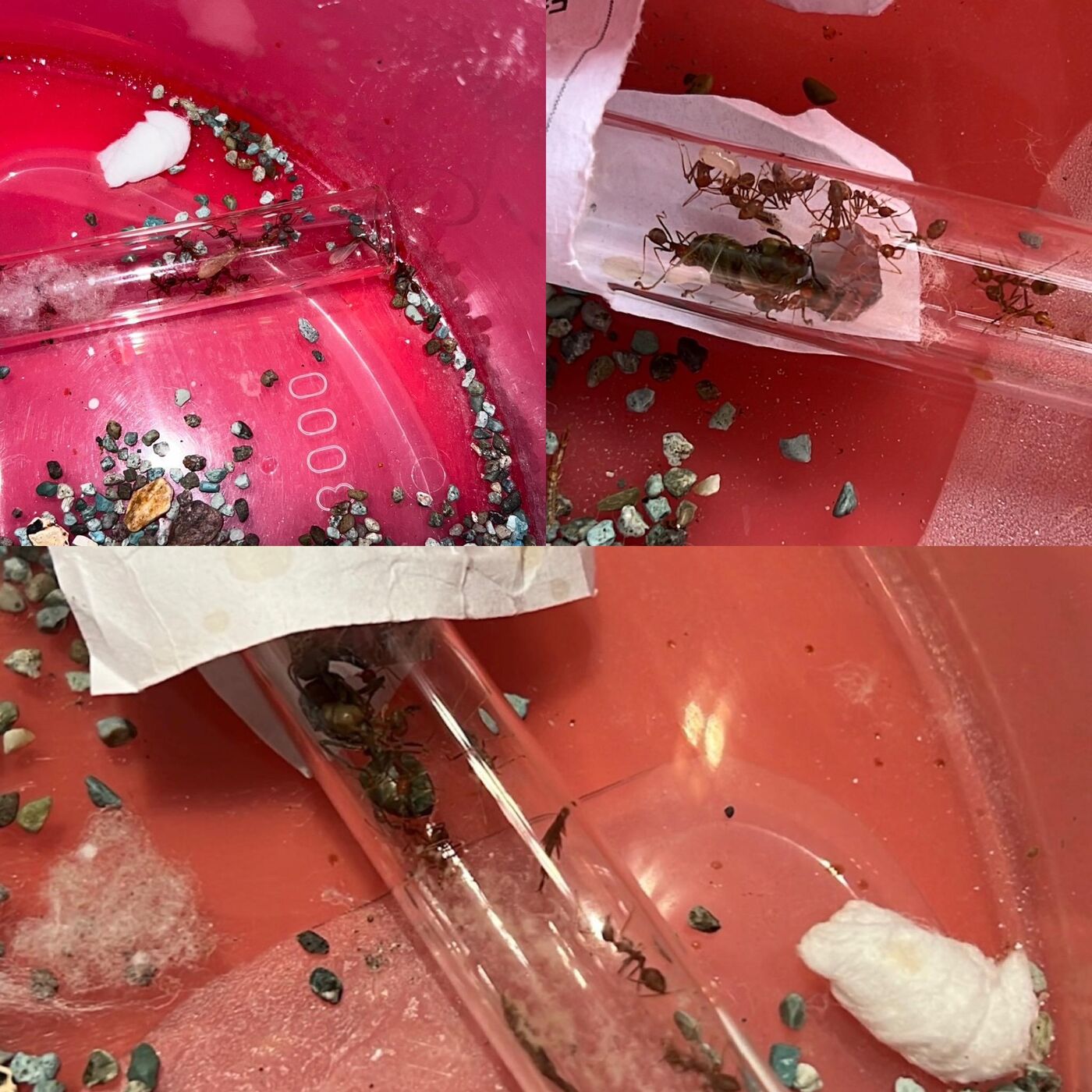
A small captive colony of weaver ants, though raised under controlled conditions, serves as a microcosm of the challenges these ants face in a changing climate. Starting from a single fertile queen, a small colony of Oecophylla smaragdina was successfully raised in a test tube setup covered with paper, which kept it in stable shade while maintaining consistent temperature and humidity levels that closely mimicked their natural nesting conditions. Over time, the colony grew to approximately 30 workers, with the queen exhibiting normal behavioral patterns and reproductive activity. However, as the colony expanded, it began to overpopulate the small test tube they were in. As a result, the colony was transferred to a plastic tub that was exposed to an outdoor environment. This new environment, with fluctuating temperature, humidity, and some exposure to sunlight, starkly contrasted with the stable, controlled microclimate they had thrived in previously. As a result, these sudden environmental changes led to rapid queen mortality—just within one night.
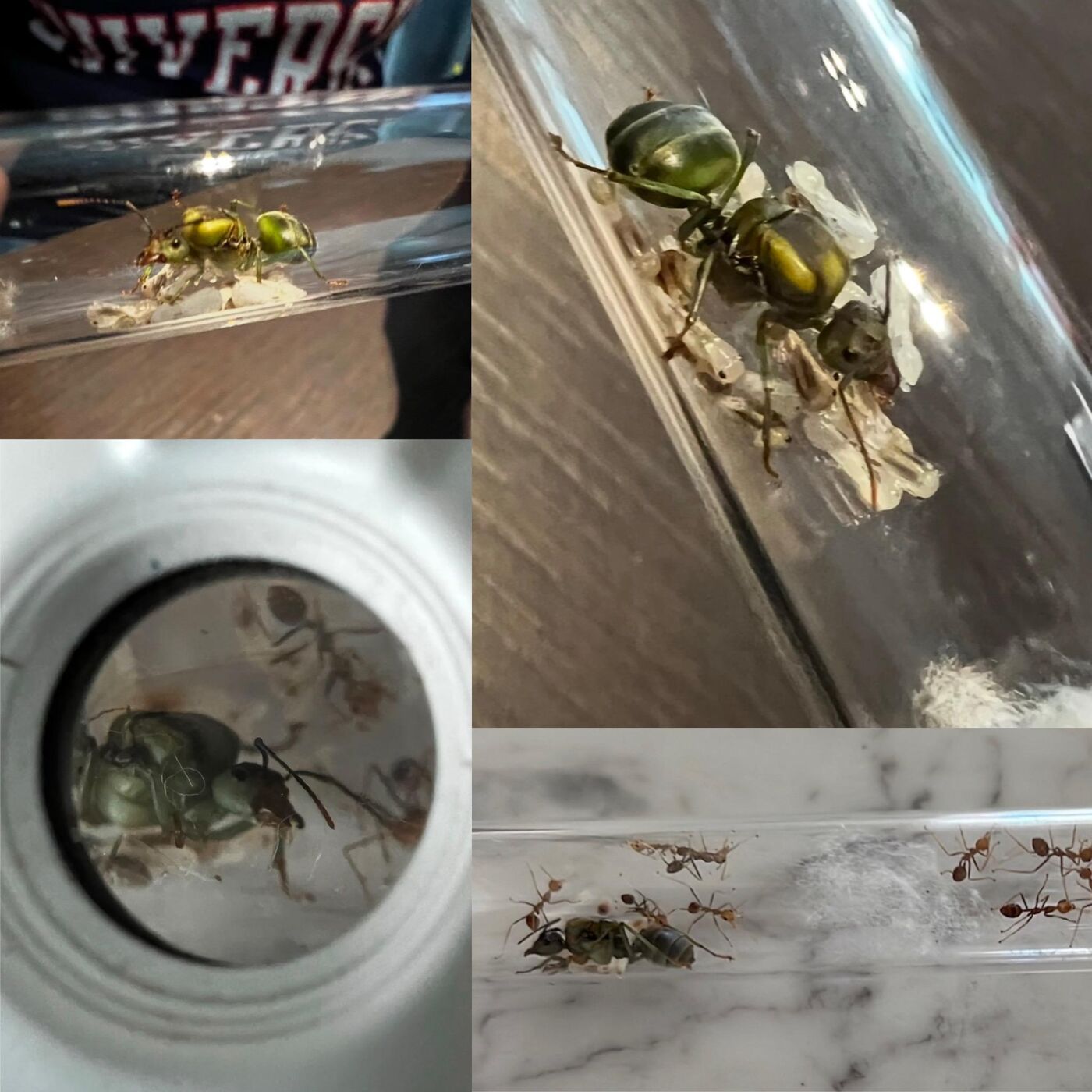
This outcome, while limited in scope, suggests a significant constraint in physiological adaptability to sudden environmental change—one that is potentially analogous to climate change impacts on natural populations. It displays the delicate and sensitive nature that weaver ants face in the wild. Just as the captive colony failed to adapt to a sudden change in environment, weaver ants—or even ants in general—are just as likely to face similar challenges as their habitats are drastically altered by climate change.
With climate changes projected to intensify, ants are making efforts to adapt, though their capacity to do so varies across different species. Diamond et al. explored how thermal tolerance traits can predict species’ responses to experimental climate warming, concluding that these traits strongly predict community-level responses to rising temperatures.16 Meanwhile, Figueroa et al. observed that warming in temperatures affects forest ant communities, particularly in terms of foraging activity and shifts in species composition.17 However, not all species are able to carry out this flexibility. Research by Jewell et al. found that certain ant species show little to no behavioral changes when experiencing warmer temperatures.18 While environmental factors such as altitude, ecological zone (tropical, desert, etc.), or physiological constraints influence adaptability, where it could be due to altitude, type of place (whether tropical, desert, etc.), or physiological constraints, there will be a thermal threshold beyond which adaptation becomes impossible. Currently, short-term adaptation strategies in various ant species include the time of day in foraging activity (favoring cooler periods), modifications to their nest structures (enlarging and deepening the size of nests for temperature regulation), and even microhabitat relocation (in response to habitat destruction caused by climate change). The rapid pace of contemporary climate change is demonstrating its earth-scarring impacts, presenting a multitude of challenges for evolutionary adaptation in ants. While ants have successfully navigated climatic transformations throughout their 140 million-year history, the current unprecedented rate of global warming is entirely different from any other period in the past.19
To say ants will go extinct, however, is unlikely—there are quadrillions of them. But as it nears the potential reality, the delicate balance of ecological processes would be disrupted. This will only lead to more problems and more negative effects—practically known as the butterfly effect. Since ants are near the bottom of the food chain, their extinction would set off a chain reaction, causing a collapse of ecosystems. Firstly, ants play a dual role in ecosystems, acting as both prey and predators. Their “prey” side allows them to serve as a vital food source for a wide array of animals, such as birds, reptiles, and mammals. Their disappearance would deprive these predators of an important protein source, which would lead to population declines and more imbalance in the food webs. On the other hand, ants are consumers of other insects, including herbivorous pests that damage crops and vegetation. By controlling pest populations, they help to regulate the health of ecosystems and support agricultural productivity. For instance, weaver ants assist their host plants with protection from pests.20 Without ants, pest populations could explode, leading to widespread crop damage, reduced agricultural yields, and economic losses. Since their other functions include contributing to nutrient cycling and decomposition, their absence would result in the degradation of both soil and plant quality. As Parr and Bishop note, “changes to ant abundance and occurrence patterns due to ongoing climate change are likely to have significant implications for the structure, integrity, and functioning of terrestrial ecosystems.”21 Perhaps if climate change was advancing at a slower pace, ants would likely possess sufficient evolutionary capacity to develop adaptations in response to the changing environmental conditions.
The ecological relationship between ants and climate change reveals fundamental patterns of environmental disruption that extend throughout ecosystems. But as duly stated previously, ants function as sensitive bioindicators of environmental change due to their ectothermic physiology and precise thermoregulatory requirements. Their capacity to serve as ecosystem engineers—facilitating soil aeration, nutrient cycling, seed dispersal, and pest control—places them in a position whose population dynamics influence ecological communities. Climate change is reshaping the world in profound ways, and ants are no exception to its effects. These changes are disrupting their behavior, distribution, and survival strategies as they attempt to grapple with the rapidly shifting environmental conditions. The study on weaver ants helps illuminate the particular vulnerability of specialized species to environmental change. This, however, extends beyond a single species and that climate change affects all ants in various ways. The potential consequences of ant declines underscore the interconnected nature of ecosystems while highlighting the urgency of addressing climate change not merely for the continuation of the human race, but as a universal and comprehensive threat to all biological diversity. As climate change advances, the fate of ants stands both as a warning and a call to action, reminding humanity of its responsibility to protect even the smallest intricate ecological relationships that sustain the functionality of earth’s ecosystems.
Bibliography
"Ants Are as Old as Dinosaurs. Ants' Evolution." Best Ants UK (blog). Accessed March 3, 2025. https://www.bestantsuk.com/post/ants-are-as-old-as-dinosaurs-ants-evolution#:~:text=These%20incredible%20creatures%20first%20appeared,scarce%20compared%20to%20other%20insects.
Archie, Ayana. "The number of Ants on Earth Has a Mass Greater than All Birds and Mammals Combined." National Public Radio, September 21, 2022. Accessed February 27, 2025. https://www.npr.org/2022/09/21/1124216118/ants-number-study-quadrillion.
Bertelsmeier, Cleo, Olivier Bright, and Franck Courchamp. "Invasions of Ants (Hymenoptera: Formicidae) in Light of Global Climate Change." Abstract. Myrmecological News, October 24, 2015, 25-42. Accessed February 27, 2025. https://myrmecologicalnews.org/cms/index.php?option=com_download&view=download&filename=volume22/mn22_25-42_printable.pdf&format=raw.
Cartier, Kimberly. "Ants Aren't Adapting to Warmer Temperatures." Eos 104 (February 17, 2023). https://doi.org/10.1029/2023eo230055.
Clair, Jeff St. "What Ants Can Teach Us about the Effects of Climate Change." Ideastream Public Media, May 15, 2017. Accessed February 27, 2025. https://www.ideastream.org/news/health-science/2017-05-15/what-ants-can-teach-us-about-the-effects-of-climate-change.
Diamond, Sarah E., Lauren M. Nichols, Neil McCoy, Christopher Hirsch, Shannon L. Pelini, Nathan J. Sanders, Aaron M. Ellison, Nicholas J. Gotelli, and Robert R. Dunn. "A Physiological Trait‐based Approach to Predicting the Responses of Species to Experimental Climate Warming." Ecology 93, no. 11 (2012): 2305-12. Accessed February 27, 2025. https://doi.org/10.1890/11-2296.1.
Diamond, Sarah E., Lauren M. Nichols, Shannon L. Pelini, Clint A. Penick, Grace W. Barber, Sara Helms Cahan, Robert R. Dunn, Aaron M. Ellison, Nathan J. Sanders, and Nicholas J. Gotelli. "Climatic Warming Destabilizes Forest Ant Communities." Science Advances 2, no. 10 (2016). Accessed February 28, 2025. https://doi.org/10.1126/sciadv.1600842.
Dunn, Robert R., Aaron Ellison, Nicholas Gotelli, and Nathan Sanders. Response of Ants at Harvard Forest to Climate Change. April 13, 2009. Accessed February 28, 2025. https://harvardforest1.fas.harvard.edu/exist/apps/datasets/showData.html?id=hf113.
Figueroa, Laura L., Audrey Maran, and Shannon L. Pelini. "Increasing Temperatures Reduce Invertebrate Abundance and Slow Decomposition." PLOS One 16, no. 11 (2021): e0259045. https://doi.org/10.1371/journal.pone.0259045.
García Ibarra, Fátima, Pascal Jouquet, Nicolas Bottinelli, Angélique Bultelle, and Thibaud Monnin. "Experimental Evidence That Increased Surface Temperature Affects Bioturbation by Ants." Journal of Animal Ecology 93, no. 3 (2023): 319-32. Accessed February 27, 2025. https://doi.org/10.1111/1365-2656.14040.
Jewell, Michelle, Elsa Yougsteadt, Sara Prado Kirchner, Michelle Kirchner, and Kirsten Keleher. "Climate Conundrum: Study Finds Ants Aren't Altering Behavior in Rising Temperatures." NC State News (Raleigh, NC), January 16, 2023. Accessed February 27, 2025. https://news.ncsu.edu/2023/01/16/climate-conundrum-study-finds-ants-arent-altering-behavior-in-rising-temperatures/.
Lokkers, Cornel. "Colony Dynamics of the Green Tree Ant (Oecophylla Smaragdina Fab.) in a Seasonal Tropical Climate." PhD diss., James Cook University, 1990. Accessed February 27, 2025. https://researchonline.jcu.edu.au/24114/2/02whole.pdf.
McManamna, Spencer. "All about Ants: Climate and Temperature." Insect Lore (blog), November 4, 2024. Accessed February 27, 2025. https://www.insectlore.com/blogs/ants/all-about-ants-climate-and-temperature.
"Migratory Patterns of Ants: Understanding Seasonal Changes." Lively Ants. Accessed February 27, 2025. https://www.livelyants.com/migratory-patterns-of-ants-understanding-seasonal-changes.
Neumann, Kevin. "Climbing to Survive: Ants in the Rainforest Canopy May Be Resistant to Effects of Climate Change." Envirobites (blog), March 4, 2024. Accessed February 27, 2025. https://envirobites.org/2024/03/05/climbing-to-survive-ants-in-the-rainforest-canopy-may-be-resistant-to-effects-of-climate-change/.
Newswise. "Ants Rise with Temperature." March 6, 2013. Accessed February 27, 2025. https://www.newswise.com/articles/ants-rise-with-temperature.
Nowrouzi, Somayeh, Alex Bush, Tom Harwood, Kyran M. Staunton, Simon K. A Robson, and Alan N. Andersen. "Incorporating Habitat Suitability into Community Projections: Ant Responses to Climate Change in the Australian Wet Tropics." Diversity and Distributions 25, no. 8 (2019): 1273-88. https://doi.org/10.1111/ddi.12935.
Parr, Catherine L., and Tom R. Bishop. "The Response of Ants to Climate Change." Global Change Biology 28, no. 10 (2022): 3188-205. https://doi.org/10.1111/gcb.16140.
Pelini, Shannon L., Mark Boudreau, Neil McCoy, Aaron M. Ellison, Nicholas J. Gotelli, Nathan J. Sanders, and Robert R. Dunn. "Effects of Short-term Warming on Low and High Latitude Forest Ant Communities." Ecosphere 2, no. 5 (2011): art62. Accessed February 28, 2025. https://doi.org/10.1890/es11-00097.1.
Resasco, Julian, Shannon L. Pelini, Katharine L. Stuble, Nathan J. Sanders, Robert R. Dunn, Sarah E. Diamond, Aaron M. Ellison, Nicholas J. Gotelli, and Douglas J. Levey. "Using Historical and Experimental Data to Reveal Warming Effects on Ant Assemblages." PLoS ONE 9, no. 2 (2014): e88029. https://doi.org/10.1371/journal.pone.0088029.
Thurman, Jessa H., Tobin D. Northfield, and William E. Snyder. "Weaver Ants Provide Ecosystem Services to Tropical Tree Crops." Frontiers in Ecology and Evolution 7 (May 15, 2019). Accessed March 3, 2025. https://doi.org/10.3389/fevo.2019.00120.
-
Ayana Archie, “The number of Ants on Earth Has a Mass Greater than All Birds and Mammals Combined,” National Public Radio, September 21, 2022, accessed February 27, 2025, https://www.npr.org/2022/09/21/1124216118/ants-number-study-quadrillion. ↩
-
Spencer McManamna, “All about Ants: Climate and Temperature,” Insect Lore (blog), November 4, 2024, accessed February 27, 2025, https://www.insectlore.com/blogs/ants/all-about-ants-climate-and-temperature. ↩
-
Cornel Lokkers, “Colony Dynamics of the Green Tree Ant (Oecophylla Smaragdina Fab.) in a Seasonal Tropical Climate” (PhD diss., James Cook University, 1990), 10, accessed February 27, 2025, https://researchonline.jcu.edu.au/24114/2/02whole.pdf. ↩
-
Laura L. Figueroa, Audrey Maran, and Shannon L. Pelini, “Increasing Temperatures Reduce Invertebrate Abundance and Slow Decomposition,” PLOS One 16, no. 11 (2021): https://doi.org/10.1371/journal.pone.0259045. ↩
-
Fátima García Ibarra et al., “Experimental Evidence That Increased Surface Temperature Affects Bioturbation by Ants,” Journal of Animal Ecology 93, no. 3 (2023): accessed February 27, 2025, https://doi.org/10.1111/1365-2656.14040. ↩
-
García Ibarra et al., “Experimental Evidence.” ↩
-
Michelle Jewell et al., “Climate Conundrum: Study Finds Ants Aren’t Altering Behavior in Rising Temperatures,” NC State News (Raleigh, NC), January 16, 2023, accessed February 27, 2025, https://news.ncsu.edu/2023/01/16/climate-conundrum-study-finds-ants-arent-altering-behavior-in-rising-temperatures/. ↩
-
García Ibarra et al., “Experimental Evidence.” ↩
-
Somayeh Nowrouzi et al., “Incorporating Habitat Suitability into Community Projections: Ant Responses to Climate Change in the Australian Wet Tropics,” Diversity and Distributions 25, no. 8 (2019): [Page #], https://doi.org/10.1111/ddi.12935. ↩
-
Kevin Neumann, “Climbing to Survive: Ants in the Rainforest Canopy May Be Resistant to Effects of Climate Change,” Envirobites (blog), March 4, 2024, accessed February 27, 2025, https://envirobites.org/2024/03/05/climbing-to-survive-ants-in-the-rainforest-canopy-may-be-resistant-to-effects-of-climate-change ↩
-
Lokkers, “Colony Dynamics,” 25. ↩
-
Lokkers, “Colony Dynamics,” 80, 268. ↩
-
Lokkers, “Colony Dynamics,” 78-82. ↩
-
Sarah E. Diamond et al., “Climatic Warming Destabilizes Forest Ant Communities,” Science Advances 2, no. 10 (2016): accessed February 28, 2025, https://doi.org/10.1126/sciadv.1600842. ↩
-
Neumann, “Climbing to Survive,” Envirobites (blog). ↩
-
Sarah E. Diamond et al., “A Physiological Trait‐based Approach to Predicting the Responses of Species to Experimental Climate Warming,” Ecology 93, no. 11 (2012): accessed February 27, 2025, https://doi.org/10.1890/11-2296.1 ↩
-
Figueroa, Maran, and Pelini, “Increasing Temperatures.” ↩
-
Jewell et al., “Climate Conundrum.” ↩
-
“Ants Are as Old as Dinosaurs. Ants’ Evolution.,” Best Ants UK (blog), accessed March 3, 2025, https://www.bestantsuk.com/post/ants-are-as-old-as-dinosaurs-ants-evolution#:~:text=These%20incredible%20creatures%20first%20appeared,scarce%20compared%20to%20other%20insects. ↩
-
Jessa H. Thurman, Tobin D. Northfield, and William E. Snyder, “Weaver Ants Provide Ecosystem Services to Tropical Tree Crops,” Frontiers in Ecology and Evolution 7 (May 15, 2019): accessed March 3, 2025, https://doi.org/10.3389/fevo.2019.00120. ↩
-
Catherine L. Parr and Tom R. Bishop, “The Response of Ants to Climate Change,” Global Change Biology 28, no. 10 (2022): https://doi.org/10.1111/gcb.16140. ↩